Kinnaur Valley Bike Trip Guide 2026: Kalpa to Chitkul Route

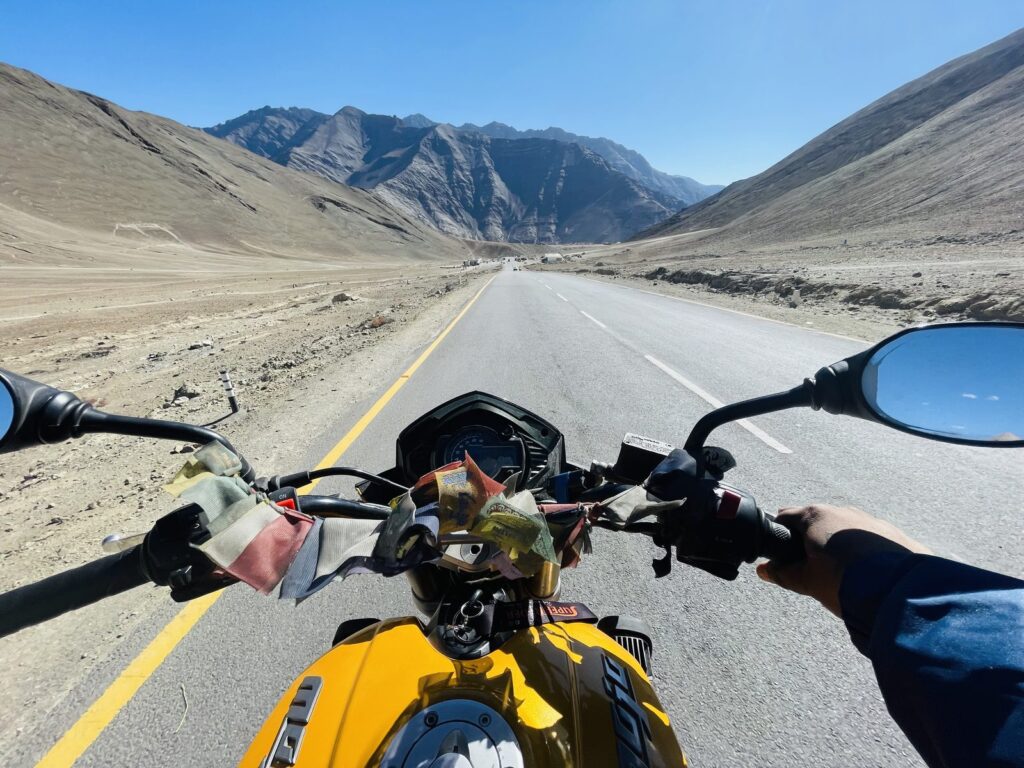
Everyone rides to Spiti. Everyone rides to Ladakh. Kinnaur is the valley most bikers blow past on the way to somewhere “bigger” – and that is exactly why it deserves its own trip. Apple orchards give way to pine forest, pine forest gives way to bare Kinnaur Kailash cliffs, and the road eventually runs out at Chitkul, the last inhabited village before the Indo-Tibetan border. No 5,000-metre pass to survive, no three-day acclimatisation window, just a genuinely wild Himalayan ride that most itineraries skip.
Here’s everything you need to plan a Kinnaur Valley bike trip in 2026 – the route from Shimla, where to stop, what the roads are actually like, and how to fold it into a longer Spiti loop if you’ve got the time.
Why Ride to Kinnaur
Kinnaur sits in the rain shadow of the Himalayas, so the landscape changes character almost every 20 kilometres. You start in the green, terraced hills around Narkanda, drop into the dramatic Sutlej gorge, and by the time you cross Karcham you’re riding along the turquoise Baspa river into apple and walnut orchards that look nothing like the desert-brown Spiti valley just over the ridge. It’s one of the few Himalayan routes where the scenery genuinely surprises you at every bend, and because it doesn’t require the same permits or altitude prep as Ladakh, it’s a far more approachable first big mountain ride.
Best Time to Ride to Kinnaur
The riding season runs from April to June and September to November. Summer (July-August) brings monsoon landslides on the Sutlej gorge stretch, which is the single most dangerous part of the route, so it’s best avoided unless you’re prepared to wait out roadblocks. Late September to October is the sweet spot – clear skies, apple harvest season in Sangla, and daytime temperatures that stay rideable even up at Chitkul. Winter access (December-March) is possible but Chitkul and Sangla see heavy snow and several stretches close entirely.
The Route: Shimla to Kinnaur
Most riders start from Shimla and follow NH-5 through Narkanda and Rampur before turning off toward Sarahan and then Kinnaur proper. A quick Shimla sticker on the panniers is a fitting way to mark the starting point before the roads get interesting.
- Day 1: Shimla to Sarahan (via Narkanda, Rampur) – roughly 180 km, mostly good tarmac with a few hairpins near Narkanda. Sarahan’s Bhimakali Temple is worth the detour.
- Day 2: Sarahan to Kalpa (via Karcham) – around 100 km. This is where the Sutlej gorge road narrows and the famous Kinnaur Kailash range comes into view. Kalpa’s sunrise over the Kailash peaks is one of the best you’ll get on a Himachal ride.
- Day 3: Kalpa to Sangla via Karcham Dam and the Baspa valley – about 60 km, but budget half a day for it. The turn after Karcham Dam is narrow, steep, and cliffside; riders often call it “the scariest road in India,” so this is not a stretch to rush.
- Day 4: Sangla to Chitkul and back to Sangla – roughly 50 km round trip along the Baspa river, on noticeably better road than the Karcham-Sangla stretch.
Kalpa: Where the Kailash Range Steals the Show
Kalpa replaced Chini as the district headquarters for a reason – the views are unbeatable. The town sits directly across from the Kinnaur Kailash massif, and mornings here are worth losing sleep over. It’s also your last reliable stop for a proper bike service and fuel top-up before the roads get rougher heading into Sangla.
Sangla Valley and the Baspa River
Sangla is Kinnaur at its most postcard-perfect: orchards, the Kamru Fort watching over the valley, and the Baspa river running an improbable shade of green-blue alongside the road. It’s also a good base if you want to break up the ride rather than pushing straight to Chitkul in one day. Trout farms along the river make for an easy, low-key stop if you need a break from the saddle.
Chitkul: The Last Village of India
Chitkul is the payoff. It’s the last motorable village on the Indo-Tibetan border on this route, sitting at roughly 11,320 ft, with wooden Kinnauri houses, a small stream, and views straight up the valley toward the border ridgeline. There’s a genuine sense of “the road stops here” that few other rides in India offer without a permit or a multi-day trek. It’s become enough of a milestone for bikers and travellers that it’s earned its own Chitkul travel badge – the kind of thing that means more stuck on a jacket or top box after you’ve actually ridden the Karcham stretch to get there.
Road Conditions and Riding Tips
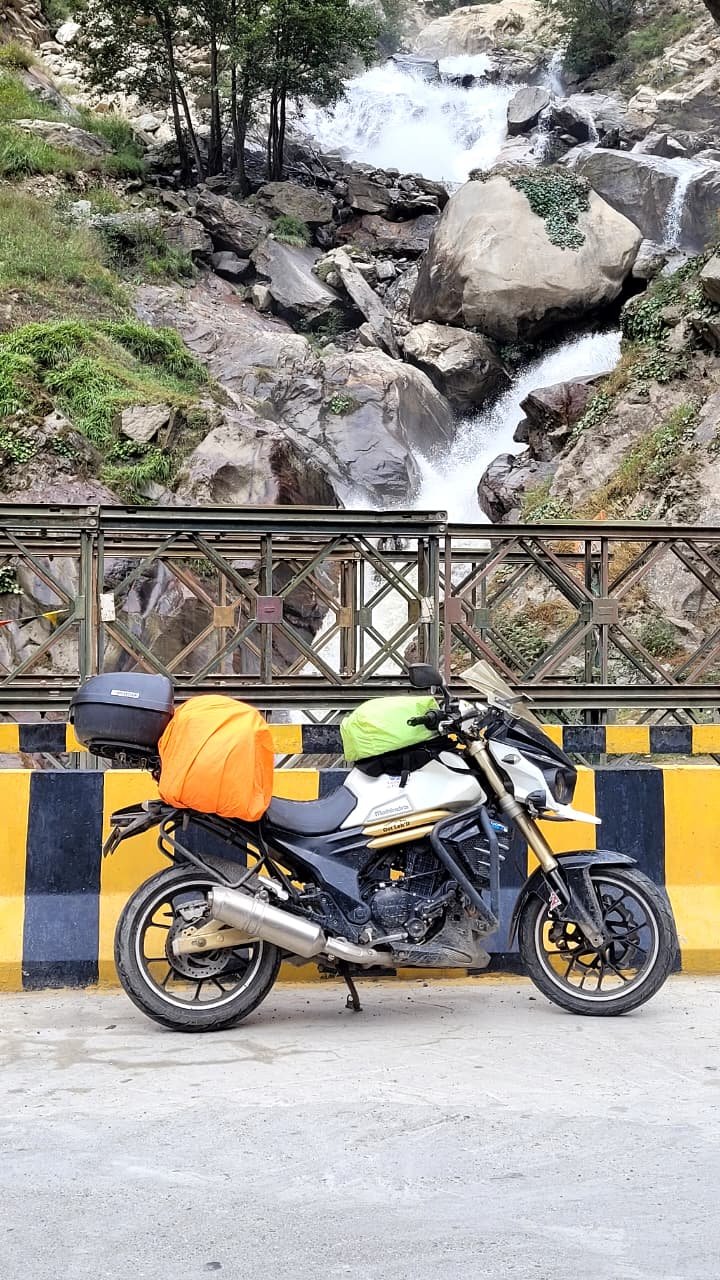
The Shimla-Narkanda-Rampur stretch is good highway riding. Things change after Karcham: the road toward Sangla is narrow, has blind curves, and drops off sharply toward the river in places, so keep speeds low and give trucks room on the inside line. BSNL is the only network with real coverage past Sangla, so let people know you’ll be off-grid for a day or two. Fuel up in Rampur or Kalpa – pumps get scarce after that. A 150cc+ bike handles the route fine; you don’t need anything more aggressive than what you’d take to Spiti.
Extending the Ride: Kinnaur to Spiti
If you’ve got more days, Kinnaur connects naturally into a Spiti loop via Kaza – many riders do Shimla-Kinnaur-Spiti-Manali as a single circuit rather than backtracking. If Kaza is on your extended route, it’s worth grabbing the Kaza travel badge to go alongside the Chitkul one – between the two you’ve got a record of riding from India’s last village on one side of the range to one of its highest inhabited towns on the other.
Sample 7-Day Kinnaur Itinerary
- Day 1: Delhi/Chandigarh to Shimla
- Day 2: Shimla to Sarahan
- Day 3: Sarahan to Kalpa
- Day 4: Kalpa to Sangla (via Karcham Dam)
- Day 5: Sangla to Chitkul and back to Sangla
- Day 6: Sangla to Narkanda
- Day 7: Narkanda to Delhi/Chandigarh
FAQs About a Kinnaur Valley Bike Trip
Do I need a permit to visit Chitkul or Kinnaur?
No inner line permit is required for Indian nationals to visit Chitkul or the rest of Kinnaur – this changed some years ago and the whole circuit is now open to regular travel. Foreign nationals should double-check current requirements before travelling, as rules near border areas can change.
Is the Kinnaur route safe for beginner riders?
Most of the route is manageable for a reasonably experienced rider, but the Karcham-to-Sangla stretch is narrow, steep, and cliffside, and demands full attention. It’s not a route to learn mountain riding on, but it’s noticeably less technical than high passes like Khardung La or Kunzum La.
How many days do I need for a Kinnaur Valley trip?
A comfortable loop from Shimla and back takes 6-7 days. You can compress it to 4-5 days if you’re only going as far as Chitkul and skipping Sarahan, but that makes for long riding days.
Can I combine Kinnaur with a Spiti Valley trip?
Yes – Kinnaur to Spiti via Kaza is one of the most popular extended circuits in Himachal, usually continuing on to Manali rather than retracing the same road back to Shimla. Add at least 4-5 extra days if you’re combining both.
Final Word
Kinnaur doesn’t have the name recognition of Ladakh or the Instagram saturation of Spiti, and that’s precisely its appeal – you get orchards, gorges, and a genuine end-of-the-road village in Chitkul without fighting crowds for the view. Ride it slow, respect the Karcham stretch, and bring something back that actually marks the places you stopped. Whether it’s a badge from Chitkul, one from Kalpa or Shimla, or a full sticker pack for the panniers, Stick The Vibe’s India Series is built for exactly this kind of trip.